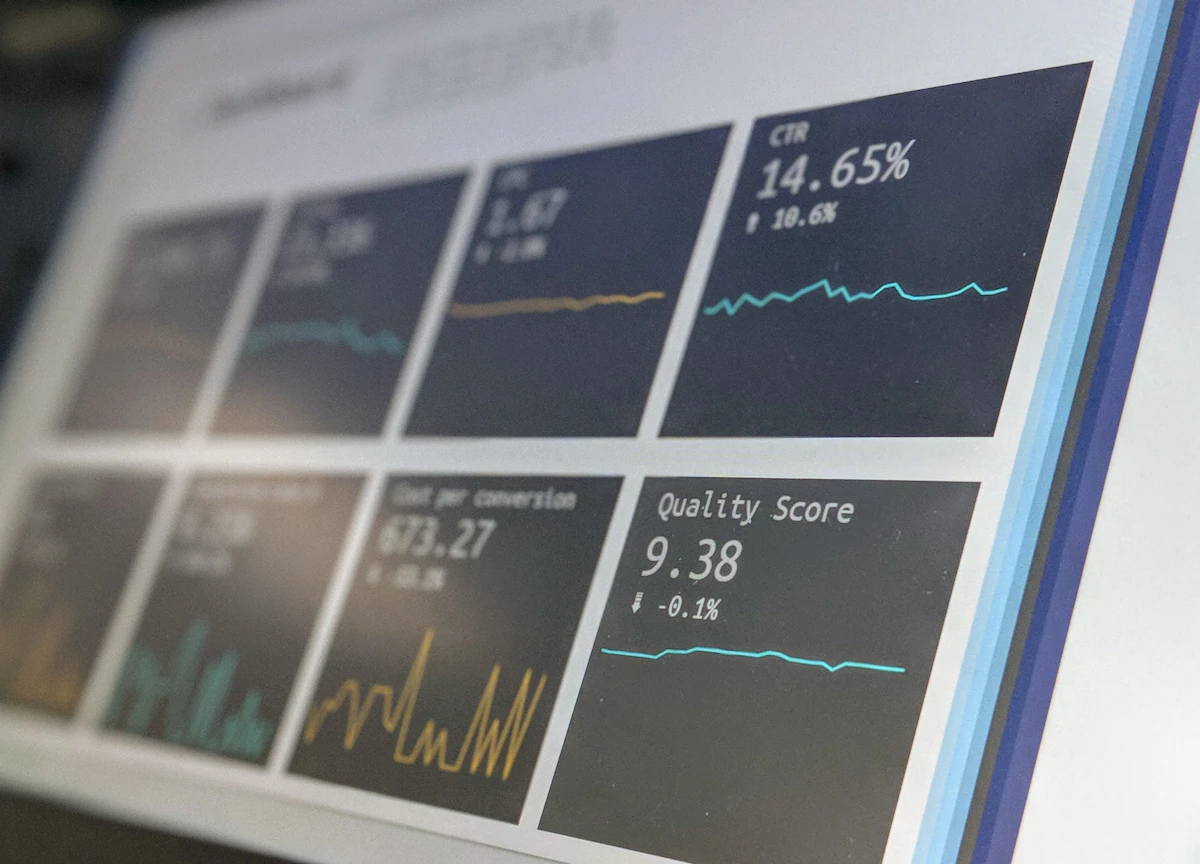
Most U.S. businesses underuse AI where it matters most. Learn which business areas deliver real ROI from AI and how to build a strategy that drives measurable growth. Start today.

Most U.S. businesses have experimented with AI, but very few are using it where it actually matters. The difference between businesses that generate real returns from AI and those that waste budget on novelty tools comes down to one question: is AI being deployed against the highest-leverage problems in the business, or is it sitting in low-impact corners where it cannot move the needle? Understanding where AI delivers the strongest returns across marketing, sales, operations, and customer experience is the starting point for any AI strategy that produces measurable results.
AI delivers the strongest returns in U.S. businesses when it is applied to high-frequency, high-volume tasks that follow predictable logic: lead follow-up, customer support triage, appointment setting, content generation, and data processing. These tasks share one critical characteristic: they consume significant human time but do not require human judgment at every step.
Stanford HAI's 2024 AI Index Report documents that AI has surpassed human performance across a growing range of standardized benchmarks, including reasoning and language tasks that underpin the most impactful business automation use cases. For U.S. businesses, this means AI is no longer a future capability but a present-day operational tool that performs reliably at scale across tasks that previously required dedicated staff time.
The highest-impact automation targets for U.S. businesses are lead qualification and follow-up sequences, customer support first-response handling, appointment scheduling and reminders, invoice and order processing, social media and email content generation, and data extraction from inbound documents. Each of these tasks is high-frequency, rule-following, and measurably time-consuming without automation.
AI business automation readiness checklist for U.S. businesses:
AI saves U.S. business time most immediately through three automation categories: communication automation that handles inbound inquiries and outbound follow-ups without human intervention, scheduling automation that manages bookings and reminders without back-and-forth coordination, and content automation that drafts and distributes recurring marketing materials at scale.
Mini case study: A U.S. professional services firm with a three-person sales team was spending an estimated 40 percent of each salesperson's week on manual lead follow-up emails, appointment confirmation calls, and scheduling rescheduling. After deploying an AI sales and appointment setting system, the same team recovered those hours for revenue-producing activities. The automation handled first-contact follow-up, confirmed appointments, and sent reminders without human involvement. Lead response time dropped from over 24 hours to under five minutes. Close rate on qualified leads improved because response speed increased.
AI automation reduces repetitive manual work for U.S. businesses by replacing the human-in-the-loop on tasks that have a defined input, a defined output, and a predictable logical path between them. The human team focuses on the judgment-intensive exceptions; the AI handles the rule-following volume.
Harvard Business Review's analysis of how LLMs are overtaking traditional search confirms that AI is reshaping how buyers discover and evaluate businesses, placing premium value on companies that use AI to respond faster, personalize at scale, and surface relevant information without delay. U.S. businesses that automate their response and communication workflows gain a competitive advantage in buyer experience that operates continuously without proportional increases in headcount.
Integrating AI into existing U.S. business workflows requires identifying the specific handoff points where automated action can replace manual initiation: the moment a lead fills out a form, the moment a customer submits a support ticket, the moment an appointment is requested, or the moment a recurring report is due. Each of these moments represents an automation trigger.
The IMPACT AI Framework helps U.S. businesses prioritize AI integration points systematically:
U.S. businesses exploring the range of AI automation tutorials and workflow resources can find structured approaches to common business automation scenarios before selecting specific tools or platforms.
AI tools that consistently improve U.S. business productivity fall into five categories: AI chatbots and web chat agents for customer and lead handling, AI admin assistants for scheduling and task management, AI data processing bots for document extraction and reporting, AI SMS automation for follow-up and broadcast campaigns, and AI sales assistants for lead qualification and appointment setting. Each category addresses a different bottleneck in the business system.
Expert tip: U.S. businesses deploying AI for the first time achieve the fastest measurable results by selecting a single high-frequency, low-complexity automation and running it for 30 days before expanding to adjacent workflows. Starting narrow produces clean data on time saved and output quality, which builds confidence and internal alignment before scaling across more complex or customer-facing processes.
AI improves marketing and lead generation for U.S. businesses by personalizing outreach at scale, optimizing ad bidding and targeting in real time, generating content drafts that reduce production time, and qualifying inbound leads faster than any manual process. The compounding effect of faster follow-up plus better targeting produces a measurable improvement in pipeline quality.
Harvard Business Review's reporting on the Edelman 2025 Brand Trust research confirms that 64 percent of consumers buy, choose, or avoid brands based on perceived values and communication consistency, and that one in two consumers assume the worst when brands are silent. For U.S. businesses using AI-powered marketing automation, the ability to respond consistently and immediately across every channel eliminates the communication gaps that erode brand trust and buyer confidence.
AI helps U.S. businesses generate and manage leads through four mechanisms: AI chat agents that engage website visitors and capture lead information 24 hours a day, AI-driven ad optimization that improves targeting precision over time using performance data, AI email and SMS sequences that nurture leads through defined funnel stages without manual scheduling, and AI qualification bots that score and route inbound leads based on fit criteria before a human ever sees them.
U.S. businesses that integrate AI employees and assistants into their marketing and sales operations reduce the response time gap between lead capture and first contact, which is one of the strongest predictors of lead conversion across industries. A lead contacted within five minutes of submission converts at a measurably higher rate than one contacted hours later, and AI eliminates this gap entirely.
AI improves U.S. marketing strategy by enabling personalization at scale, replacing manual content production timelines with automated drafting pipelines, and identifying high-performing audience segments faster than traditional analytics cycles allow. These capabilities compound: better targeting produces better data, which enables better targeting in the next campaign cycle.
U.S. businesses that align AI automation with a coherent digital marketing strategy achieve stronger results than those deploying AI tools in isolation from their broader marketing objectives. AI amplifies an existing strategy; it does not substitute for one. The clearest signal that AI deployment is working is when marketing output increases while the time investment required from the human team decreases.
An AI strategy that supports real growth for U.S. businesses begins with diagnosing the highest-friction points in the existing revenue process, not by selecting tools based on what is trending. The diagnosis question is direct: where is the business losing time, losing leads, or losing customers because a human is required to initiate something that could be automated?
AI strategy works when it is anchored to a specific business outcome, whether that is reducing lead response time, increasing appointment conversion rate, cutting support ticket resolution time, or lowering content production cost per piece. Vague AI adoption without a defined target metric produces activity without measurable return.
U.S. businesses should avoid deploying AI in contexts that require genuine human judgment, emotional intelligence, or legally accountable decision-making without human review. AI performs best on volume tasks with clear success criteria. High-stakes contract negotiations, complex customer escalations, strategic planning, and relationship-building conversations all require human skill that AI cannot reliably replicate without significant quality degradation.
The most common mistake U.S. businesses make when implementing AI is automating customer-facing processes before testing for quality and tone alignment. An AI chat agent that responds incorrectly or impersonally to a frustrated customer creates a worse outcome than no automation at all. Test AI outputs extensively on low-stakes interactions before deploying on the primary conversion touchpoints.
Measuring AI automation ROI for U.S. businesses requires establishing a pre-automation baseline for three measurable outcomes: time spent on the automated task, error rate or inconsistency rate in the manual process, and conversion or response metrics for customer-facing automation. Post-automation, the same metrics are tracked and compared at 30, 60, and 90 days.
Common AI ROI metrics for U.S. businesses include hours recovered per week per automated workflow, lead response time reduction, appointment no-show rate reduction through AI reminders, support ticket first-response time improvement, and content output volume increase per marketing team member. Any single automation that recovers more than five hours per week across the team has already demonstrated positive ROI in most U.S. business cost structures.
Lead follow-up, appointment scheduling, customer support first response, and recurring content generation consistently produce the strongest measurable ROI from AI automation across U.S. businesses. These functions are high-frequency, time-consuming without automation, and have clear success metrics that make ROI calculation straightforward before and after deployment.
Most U.S. businesses deploying their first AI automation see measurable time savings within the first 30 days when the automation targets a high-frequency, clearly defined task. Customer-facing AI, including chat agents and email sequences, typically shows conversion impact within 60 to 90 days as the AI accumulates interaction data and the team measures the change in lead response metrics.
No. The majority of AI automation tools available to U.S. businesses operate through no-code or low-code interfaces designed for non-technical teams. Chatbots, email automation, AI SMS sequences, and scheduling tools are configured through visual interfaces that marketing or operations staff can manage without engineering support.
The most common mistake is adopting AI tools without a defined target outcome. U.S. businesses that deploy AI to appear innovative rather than to solve a specific measured problem produce minimal return and abandon the tools within months. Successful AI implementation starts with a diagnosed bottleneck, a measurable baseline, and a 30-day review window to confirm the automation is performing as intended.
AI is already delivering measurable results for U.S. businesses that deploy it where it actually matters: high-frequency, high-volume tasks with clear success criteria. Lead follow-up, marketing automation, customer support, and sales qualification are the proven high-return categories. The businesses that capture the most value from AI are not the ones with the most tools. They are the ones that matched the right automation to the right bottleneck and measured the results from day one.
Nexvato builds AI employee and automation systems for U.S. businesses, from AI customer support agents and appointment setters to AI data processing bots and SMS automation, all integrated into a cohesive digital growth strategy. Call 888-601-5359 or visit nexvato.com to schedule a free consultation and get an AI automation audit built around your specific business workflow and revenue objectives.
Get a free strategy session with Nexvato's digital marketing team.
Nexvato is a full-service digital marketing agency helping businesses grow through SEO, AI search optimization, web design, paid advertising, and AI-powered automation. We combine data-driven strategy with expert execution to deliver results that matter. Get your free consultation today →

Unlock your website's potential. Discover what website optimization is, why it's crucial for businesses, and how a website optimization company like Nexvato can transform your online success.

Discover the power of digital marketing to supercharge your small business. Learn why partnering with a digital marketing agency is the key to reaching more customers, building your brand, and achieving sustainable growth.
Ready to see your website climb to the top of Google? Nexvato's customized SEO solutions are designed to outsmart your competition and deliver real, measurable growth.
Share a few details about your business and objectives, and our team will craft a personalized growth plan focused on traffic, leads, and revenue growth.
Every recommendation is tailored to industry and built to scale your business.