Learn how AI improves operational efficiency for US businesses through automation, smarter workflows, and lower costs across daily operations. Start now.

How AI improves operational efficiency comes down to three moves: automating repetitive work, routing information instantly, and refining decisions with data. Businesses across the USA that apply all three complete more work in less time, with fewer errors and lower costs.
Operational efficiency is now a competitive requirement in the American market, not a nice-to-have. This article explains what operational efficiency really means, why US companies are adopting AI business automation so quickly, which workflows deliver the fastest savings, and the best practices that separate winning implementations from stalled ones.
AI improves operational efficiency by handling repetitive tasks automatically, processing information faster than any manual workflow, and surfacing insights that sharpen decisions. The result is more output per hour, per dollar, and per employee.
Adoption across the American economy proves the value. According to the U.S. Census Bureau's research on AI use among businesses, AI adoption keeps climbing across firm sizes and sectors, with the share of businesses using AI in production more than doubling between early 2024 and late 2025.
Operational efficiency is the ratio between what a business puts in, such as time, labor, and money, and what it gets out. An efficient operation delivers the same or better results with fewer resources, fewer delays, and fewer errors.
For US businesses, inefficiency hides in plain sight: slow follow-ups, manual data entry, duplicated communication, and untracked handoffs. Every one of those leaks compounds daily. Fixing them is where operational excellence with AI begins, because AI attacks exactly those weak points.
Artificial intelligence improves business operations by working continuously, learning from patterns, and executing rules without fatigue. Chatbots answer instantly, data bots process records around the clock, and predictive analytics flag problems before they cost money.
Apply the 3R Efficiency Cycle to see where AI fits. Remove: identify repetitive tasks AI can take over completely. Route: let AI move information, leads, and requests to the right place instantly. Refine: use AI analytics to improve decisions each month. Three steps, repeated quarterly, keep any US operation tightening instead of drifting.
Businesses adopt AI for process automation because manual processes cannot match the speed customers expect or the margins competitors achieve. Automation converts slow, error-prone routines into instant, consistent workflows.
The workforce shift confirms the momentum. A Federal Reserve analysis found that roughly 41 percent of the US workforce reported using generative AI for work as of November 2025. Employees are already working alongside AI, and companies that formalize that advantage into automated processes pull ahead of those that leave it ad hoc.
AI automates customer support inquiries, appointment scheduling, lead qualification, data entry and processing, email and SMS campaigns, review responses, and reporting. Any process built on repeatable rules and digital information is a candidate.
Customer-facing work often delivers the fastest wins. Intelligent AI agents and assistants handle support conversations, qualify leads, and manage administrative workflows around the clock, which means a US business responds at midnight exactly as well as it does at noon.
AI reduces operational costs by cutting the labor hours spent on repetitive tasks, reducing errors that require expensive rework, and scaling capacity without proportional headcount. One well-built automation performs the work of many manual hours every single day.
Cost reduction compounds quietly. When follow-up, scheduling, and data processing run automatically, teams stop paying overtime for routine work and start applying human judgment where it earns revenue. That reallocation, not layoffs, is where efficient US businesses find their margin, and it is why automation gains tend to grow rather than plateau after the first year.
The highest-value AI workflows connect the moments where businesses lose money: instant lead response, automated appointment booking, round-the-clock support resolution, continuous data processing, and campaign automation that follows up without fail.
The returns are documented at scale. MIT Sloan Management Review reports that Vanguard estimates its AI return on investment at close to 500 million dollars, with call center support among its proven use cases and programming productivity gains of roughly 25 percent, as detailed in its strategies for scaling AI results. Efficiency delivered by AI shows up directly on the bottom line.
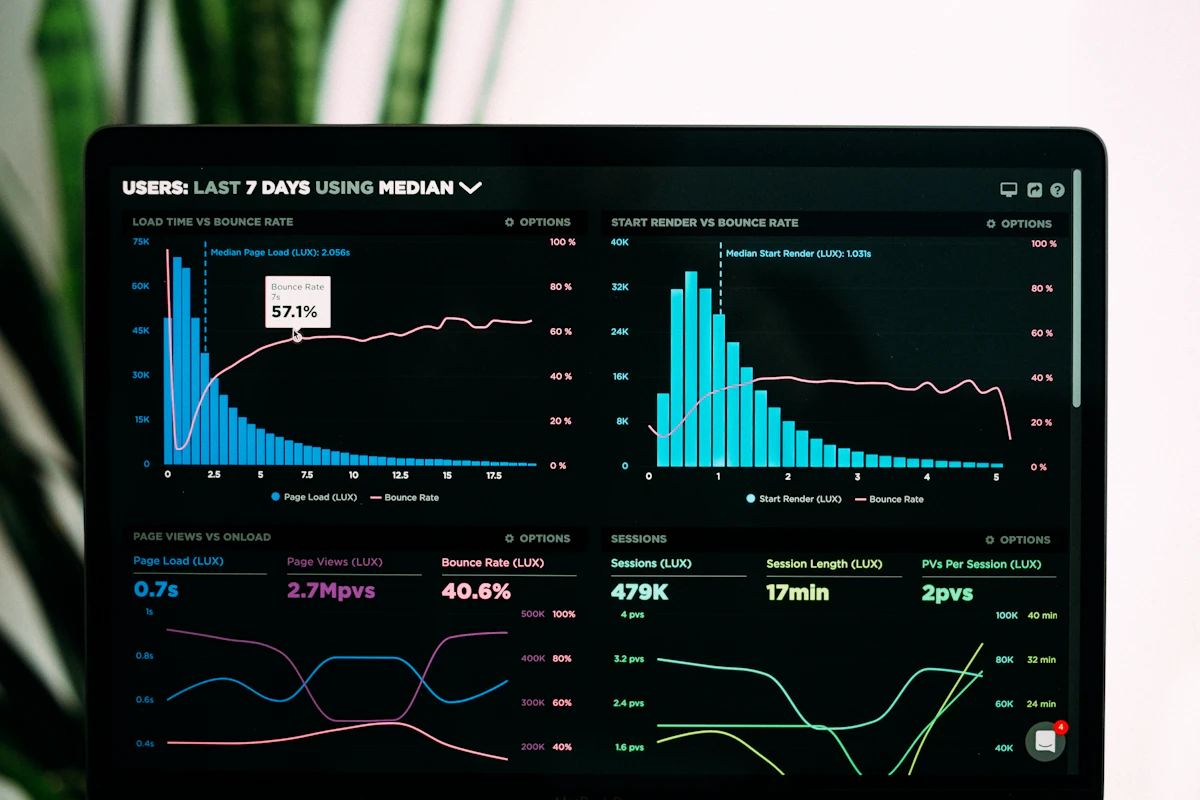
Consider a hypothetical US home services company. Before automation, staff returned calls hours later, booked appointments by hand, and updated spreadsheets nightly. After deploying AI chat, automated scheduling, and data processing bots, leads received replies in seconds, bookings synced automatically, and reports built themselves. The same three-person team handled double the volume.
The pattern repeats across industries. Marketing teams automate email and SMS sequences, sales teams automate qualification and reminders, and operations teams automate data collection. Each automation returns hours per week to work that actually grows the business.
The most common mistake is automating a broken process, which simply produces bad results faster. The second is skipping measurement, leaving no way to prove or improve the gains. The third is deploying tools without training the team that works alongside them.
Avoid all three by mapping the process first, setting a baseline metric, and assigning an owner for every automation. AI process optimization succeeds as a management practice, not a software purchase, and US businesses that treat it that way keep their gains.
Maximize AI operational efficiency by starting with one high-friction process, measuring before and after, connecting tools into a single system, and expanding only after each automation proves itself. Discipline beats ambition in every rollout.
Maturity determines the payoff. Research from the MIT Center for Information Systems Research, summarized in MIT Sloan's analysis of enterprise AI maturity, found that companies most effectively using AI for operations and customer experience outperform industry peers financially, while those in the earliest stages perform below average. Progress through the stages pays.

Follow this implementation checklist to keep your rollout on track:
Expert tip: automate the follow-up before anything else. Missed and slow follow-ups are the most expensive silent leak in most US businesses, and AI-driven campaign automation closes that leak immediately, producing visible wins that build momentum for the rest of the rollout.
AI improves operational efficiency by automating repetitive tasks, routing information instantly, and refining decisions with data. Businesses complete more work in less time with fewer errors, freeing teams to focus on judgment-driven work that grows revenue across US markets.
Start with the process that leaks the most money, which for most US businesses is lead follow-up and customer response. Automating those delivers fast, measurable wins. Scheduling, data entry, reporting, and marketing campaigns typically follow as the next highest-return automations.
Yes. Small US businesses often gain the most because AI lets a lean team deliver enterprise-level speed and consistency. Instant responses, automated scheduling, and continuous data processing add capacity without adding headcount, which directly protects margins.
Response-time and follow-up automations show results within days, since every new lead immediately receives instant handling. Cost and productivity gains typically become measurable within the first one to three months, provided baseline metrics were recorded before launch.
AI improves operational efficiency for US businesses by removing repetitive work, routing information instantly, and refining decisions with data. The winners map their processes first, measure everything, and expand automation one proven step at a time, turning efficiency into a compounding advantage instead of a one-time project.
Nexvato helps businesses across the USA build that advantage with AI Agents and Employees, intelligent automation, chatbots, predictive analytics, and the all-in-one Nexvato Business App featuring marketing automation, CRM, and analytics. Schedule a call or book a free consultation with Nexvato to map the AI roadmap that fits your operations.
Get a free strategy session with Nexvato's digital marketing team.
Nexvato is a full-service digital marketing agency helping businesses grow through SEO, AI search optimization, web design, paid advertising, and AI-powered automation. We combine data-driven strategy with expert execution to deliver results that matter. Get your free consultation today →

Unlock your website's potential. Discover what website optimization is, why it's crucial for businesses, and how a website optimization company like Nexvato can transform your online success.

Discover the power of digital marketing to supercharge your small business. Learn why partnering with a digital marketing agency is the key to reaching more customers, building your brand, and achieving sustainable growth.

Ready to see your website climb to the top of Google? Nexvato's customized SEO solutions are designed to outsmart your competition and deliver real, measurable growth.
Share a few details about your business and objectives, and our team will craft a personalized growth plan focused on traffic, leads, and revenue growth.
Every recommendation is tailored to industry and built to scale your business.