Discover why business growth becomes harder without automation and how US businesses can break through operational bottlenecks to scale faster and smarter.
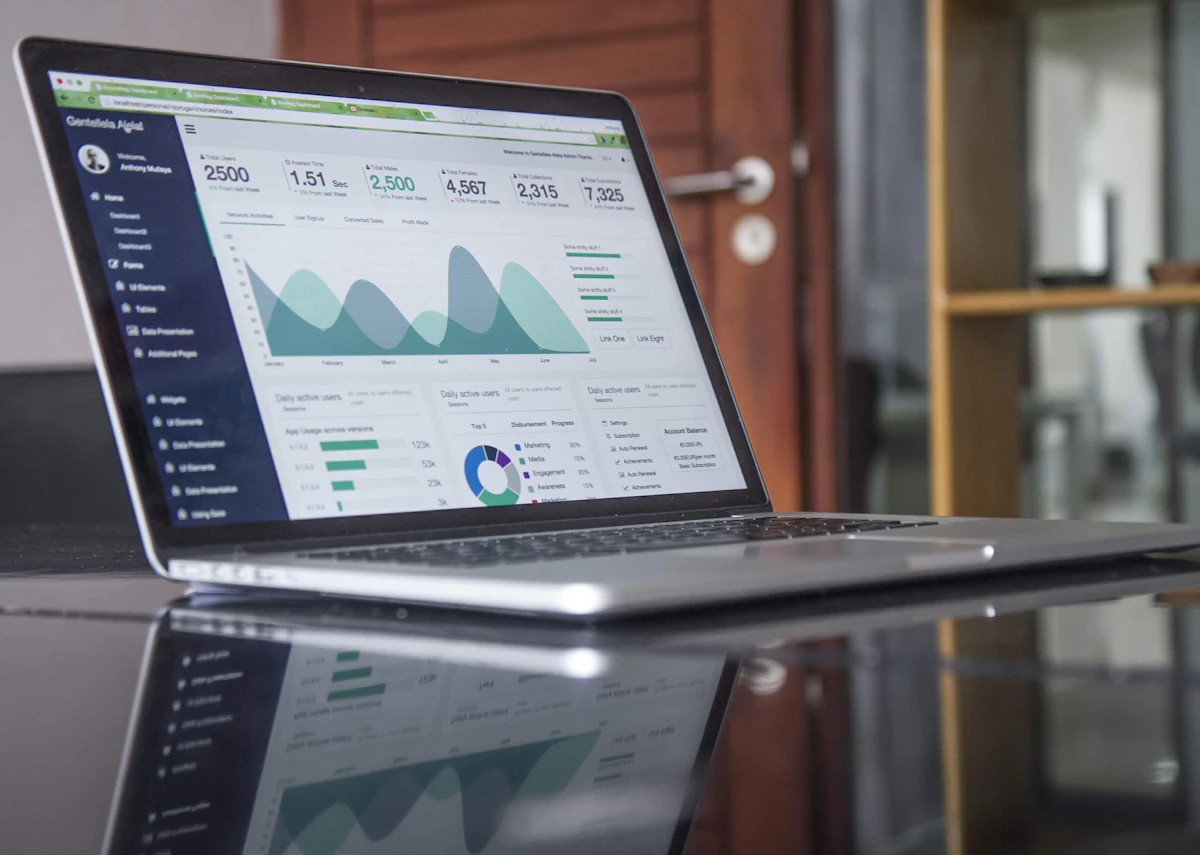
Business growth becomes harder without automation because manual processes create compounding inefficiencies that grow more damaging as your operation scales. Every new client, product, or team member adds friction to systems that were never built to handle volume. For businesses across the USA, the gap between companies that automate and those that don't is widening fast.
The challenge is not a lack of ambition. Most business owners in the USA want to scale. The real barrier is an invisible ceiling built from repetitive tasks, slow handoffs, and human error that stack up quietly until growth stalls entirely.
Manual business processes cost more than most owners realize because their true price is buried in time, not invoices. Every hour spent on data entry, manual follow-up, or copy-paste reporting is an hour not spent on growth, strategy, or client delivery.
According to a McKinsey report published in February 2024, "approximately 66% of companies have automated at least one business function," meaning a growing majority of US businesses are already eliminating the manual drag that holds competitors back.
Repetitive tasks are the silent budget killers inside most growing businesses. Scheduling appointments, sending follow-up emails, generating weekly reports, and manually updating CRM records are all tasks that consume skilled labor for zero strategic return.
The first step to identifying these drains is a simple process audit. Walk through every department and list every task that happens more than three times per week, requires no judgment, and follows a fixed pattern. That list is your automation roadmap, and in most USA businesses it runs longer than expected.
Manual work creates delays because it depends entirely on human availability, attention, and error rate. A contract waiting for a team member to return from lunch, a lead that falls through the cracks over the weekend, or a billing error that requires a follow-up call — each one is a friction point compounding over time.
Researchers at Harvard Business School found that a well-designed business process automation strategy "delivers the most value when it targets entire workflow sequences rather than isolated tasks, reducing handoff delays and decision bottlenecks in one move."
Automation improves operational efficiency by removing human dependency from tasks that do not require human judgment, allowing teams to redirect capacity toward work that actually moves the business forward.
Gartner projects that "by integrating hyper-automation with improved operating procedures, businesses can reduce operational costs by up to 30%." For US businesses operating on competitive margins, that reduction can be the difference between breaking even and scaling profitably.
Traditional workflows rely on people to carry information from one step to the next. A sales lead comes in, a person logs it, another person qualifies it, a third person follows up. Each handoff is a potential failure point.
Automated systems eliminate those handoffs. The lead enters, gets logged, scored, and followed up with inside the same workflow, without anyone touching it. Speed increases, errors drop, and the team only steps in when genuine human judgment is needed. That shift alone transforms how fast a USA business can respond to opportunities.
Human error in business operations is not a character flaw. It is a structural inevitability when people are asked to repeat identical actions dozens of times per day. Research on automation, workflows, and output quality confirms that automation applied to routine, rule-based tasks consistently reduces error rates and improves output consistency across business functions.
Automated systems follow rules precisely, every time. An invoice goes out with the correct amount, the right contact, and the right timing — not because someone remembered to check, but because the system was built that way.
Business expansion slows when internal systems cannot keep pace with incoming volume. This is not an external market problem. It is an internal infrastructure problem, and it is fully solvable through targeted workflow automation.
Businesses using automation tools report "cost reductions between 10% and 50%, primarily from eliminating repetitive tasks and reducing the error rework cycle," according to Statista research cited by KRC Research in 2024.
Customer experience degrades at scale when responses slow down, follow-ups get missed, or personalization disappears because the team is overwhelmed. These are not service quality issues. They are process failures.
Automated systems keep the customer experience consistent regardless of team size or demand volume. A new inquiry at 11pm on a Saturday gets the same fast, professional response as one sent Monday morning. That consistency builds trust, and trust drives retention.
Mini Case Study: A mid-sized home services company in Texas was manually following up with leads via email every 48 hours. Response times were inconsistent, and 30% of leads were never contacted a second time. After implementing automated follow-up workflows triggered by lead source and inquiry type, their contact rate reached 97% within the first week, and booked appointments increased significantly within 60 days. No additional staff were hired.
Scaling business operations without automation means scaling your problems alongside your revenue. More clients mean more manual tasks. More employees mean more coordination overhead. More locations mean more process inconsistency.
MIT Sloan researchers, in their analysis of how AI reshapes workflows, published findings showing that "AI's biggest impact on business operations comes not from automating individual tasks but from redesigning entire workflows as interconnected sequences."
The cost savings from automation compound over time. A workflow that saves one hour per day per employee saves 250 hours per year per person. Across a ten-person team, that is 2,500 hours annually redirected from maintenance to growth work.
The SCALE Framework for Business Automation Prioritization:
Map your current operations against these five dimensions, and your highest-value automation targets become immediately clear.
Sales, marketing, and customer support benefit most from automation because they involve the highest volume of repeatable, time-sensitive interactions. Lead qualification, appointment scheduling, follow-up sequences, and support ticket routing are all prime automation targets. Pairing these workflows with Nexvato's SEO and automation strategies ensures the leads you capture are actually followed up the moment they arrive.
Administration and finance follow closely. Invoice generation, expense tracking, payroll processing, and compliance reporting are rule-based, high-stakes, and deeply time-consuming when handled manually. Automating them frees up leadership to focus on strategic decisions rather than operational maintenance.
Expert Tip: Start automation with your highest-volume, lowest-judgment task. Do not start with the most complex problem. The goal of the first automation is to build internal confidence, prove ROI quickly, and create momentum that makes the next automation easier to justify and implement.
The highest-impact automation priorities for most USA businesses fall into three categories: lead follow-up, client onboarding, and internal reporting. These three alone can reclaim hundreds of hours per month and eliminate the most common growth bottlenecks before they become revenue problems. Explore the Nexvato Business App to see how these workflows come together inside a single platform.
A practical automation roadmap removes guesswork from the process. Use this checklist to build yours:
Business Automation Readiness Checklist:
Automation is not a one-time project. It is a continuous investment in the infrastructure that makes growth sustainable.
What is the biggest reason business growth becomes harder without automation?
The core reason is compounding manual overhead. As a business grows, every new client, order, or hire adds repetitive tasks to an already stretched team. Without automation, the operations department scales alongside the headcount, making growth increasingly expensive and slow.
How long does it take to see results from workflow automation tools?
Most businesses in the USA see measurable results within 30 to 90 days of implementing automation for high-volume, repeatable processes. Lead follow-up and scheduling automation typically show the fastest return because the volume and frequency of those tasks is high.
Which departments should automate first in a growing business?
Sales and marketing follow-up, customer onboarding, and administrative reporting deliver the fastest ROI for most growing businesses. These areas combine high task volume, low judgment requirements, and a direct impact on revenue and client experience.
Does business process automation work for small businesses in the USA?
Automation delivers disproportionately high value for small and mid-sized businesses because those teams are typically running lean. Removing manual overhead from a five-person team has a far greater relative impact than the same automation applied to a 500-person enterprise with existing administrative infrastructure.
Business growth becomes harder without automation because manual processes do not scale. They accumulate. Every repetitive task, missed follow-up, and human error represents friction that compounds as volume increases, until the system holding the business together becomes the ceiling stopping it from rising.
The solution is not hiring more people to manage more manual work. It is building systems that handle the repetitive, rule-based work automatically so that your team's capacity is directed toward clients, strategy, and growth.
Nexvato helps US businesses replace manual bottlenecks with intelligent automation systems. If your team is spending hours on tasks that a properly built system could handle in seconds, explore Nexvato's AI Employees and Assistants that handle lead qualification, customer support, scheduling, and workflow management around the clock — or contact Nexvato for a free consultation and let's map your highest-impact automation opportunities.
Get a free strategy session with Nexvato's digital marketing team.
Nexvato is a full-service digital marketing agency helping businesses grow through SEO, AI search optimization, web design, paid advertising, and AI-powered automation. We combine data-driven strategy with expert execution to deliver results that matter. Get your free consultation today →

Unlock your website's potential. Discover what website optimization is, why it's crucial for businesses, and how a website optimization company like Nexvato can transform your online success.

Discover the power of digital marketing to supercharge your small business. Learn why partnering with a digital marketing agency is the key to reaching more customers, building your brand, and achieving sustainable growth.

Ready to see your website climb to the top of Google? Nexvato's customized SEO solutions are designed to outsmart your competition and deliver real, measurable growth.
Share a few details about your business and objectives, and our team will craft a personalized growth plan focused on traffic, leads, and revenue growth.
Every recommendation is tailored to industry and built to scale your business.