
In short: Cannabis web design has to balance appeal with compliance: age verification and content limits that vary by location, an up-to-date product menu, educational content, SEO that makes up for restricted advertising, cannabis-friendly ecommerce and hosting, and a fast, mobile-first design that reflects your brand. This guide covers each for dispensaries and other cannabis businesses.
Cannabis Web Design: Building Effective Online Presence for Marijuana Businesses
We design and build websites for cannabis companies: delivery services, dispensaries and the software that runs them. We built webjoint.com and the WebJoint platform that dispensaries and delivery services use to run their business, and the team powering Nexvato has a history with WebJoint. That shapes our dispensary website design: we start from how a cannabis business actually works, from live menus and delivery zones to age verification and state rules.
Dispensary website design: cannabis websites we’ve built
A selection of the cannabis websites we’ve designed and built in Massachusetts and California. Each one has a case study covering the design, the code it runs on and the search work we built in.
The Delivered Inc, Central Massachusetts
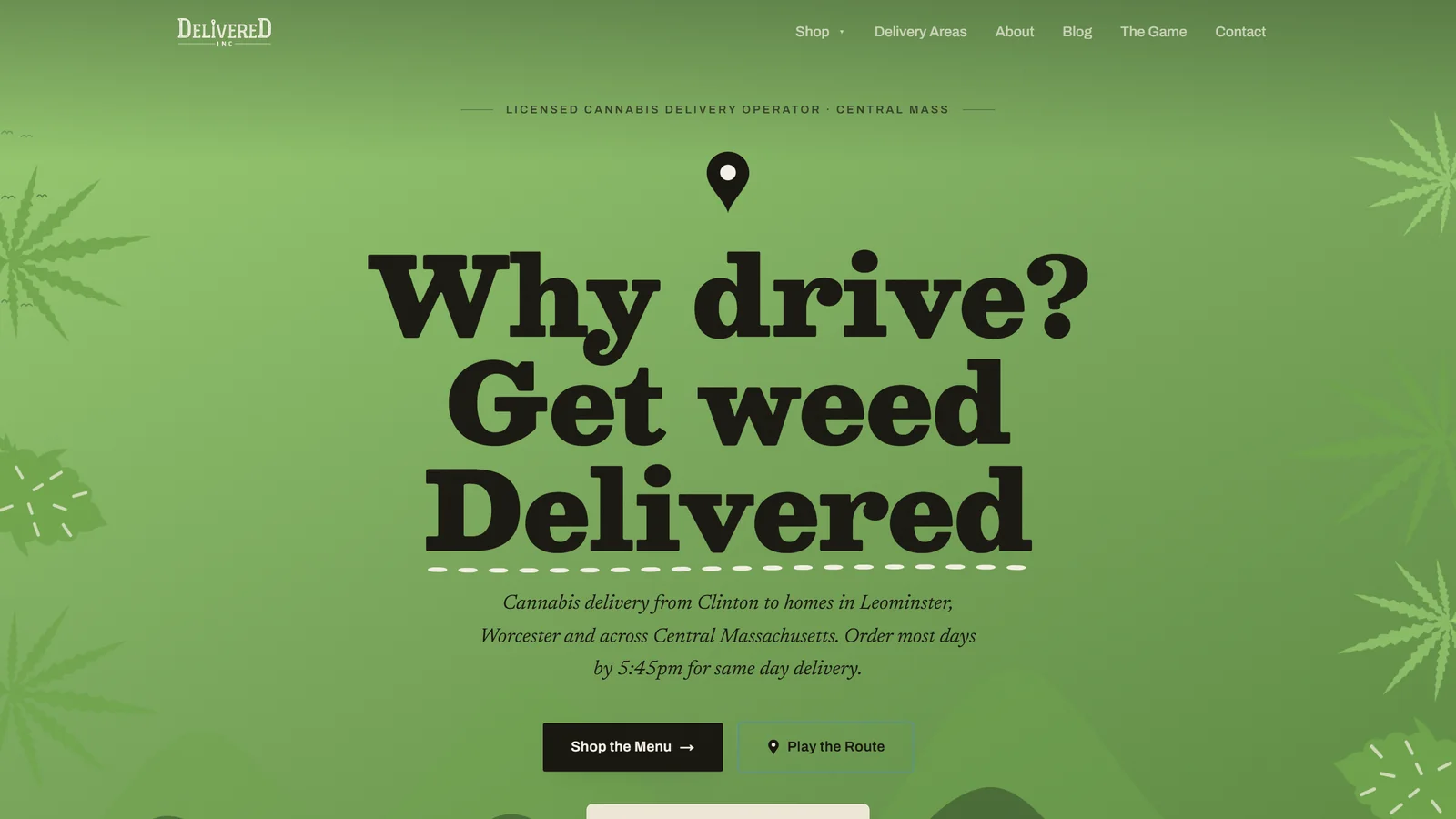
A licensed, delivery-only service in Clinton, Massachusetts. We built a route-themed site with a page for each of the 23 towns it delivers to, moved its WordPress archive over on the original addresses and served its live menu on its own domain. Read the Delivered Inc case study.
BlazeXpress, Western Massachusetts
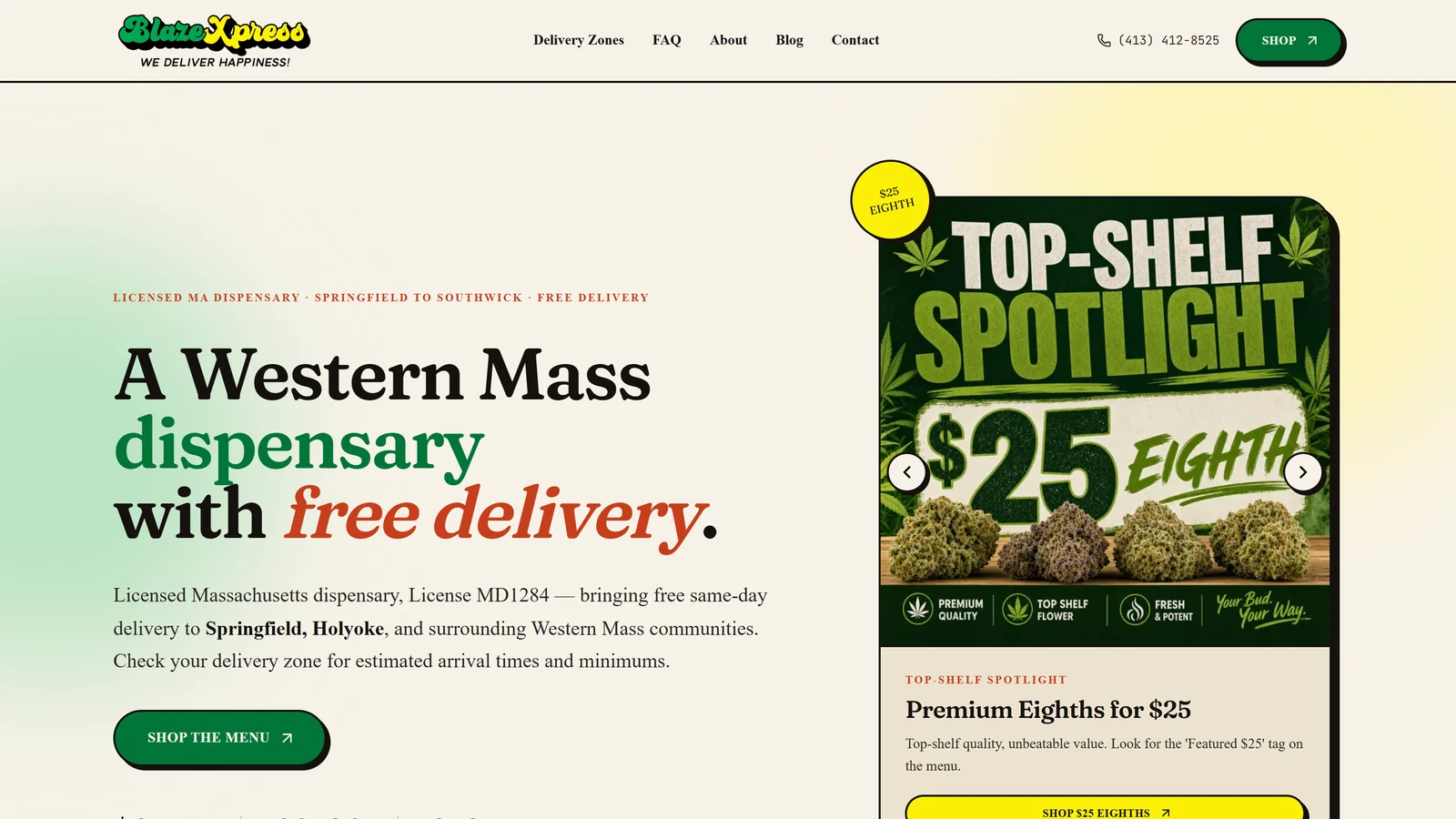
A licensed delivery service in Holyoke. We rebuilt it from WordPress with a page for each of its 15 cities, kept its old addresses working and connected every Shop button to its WebJoint storefront. Read the BlazeXpress case study.
Pineapple Express, Western and Central Massachusetts
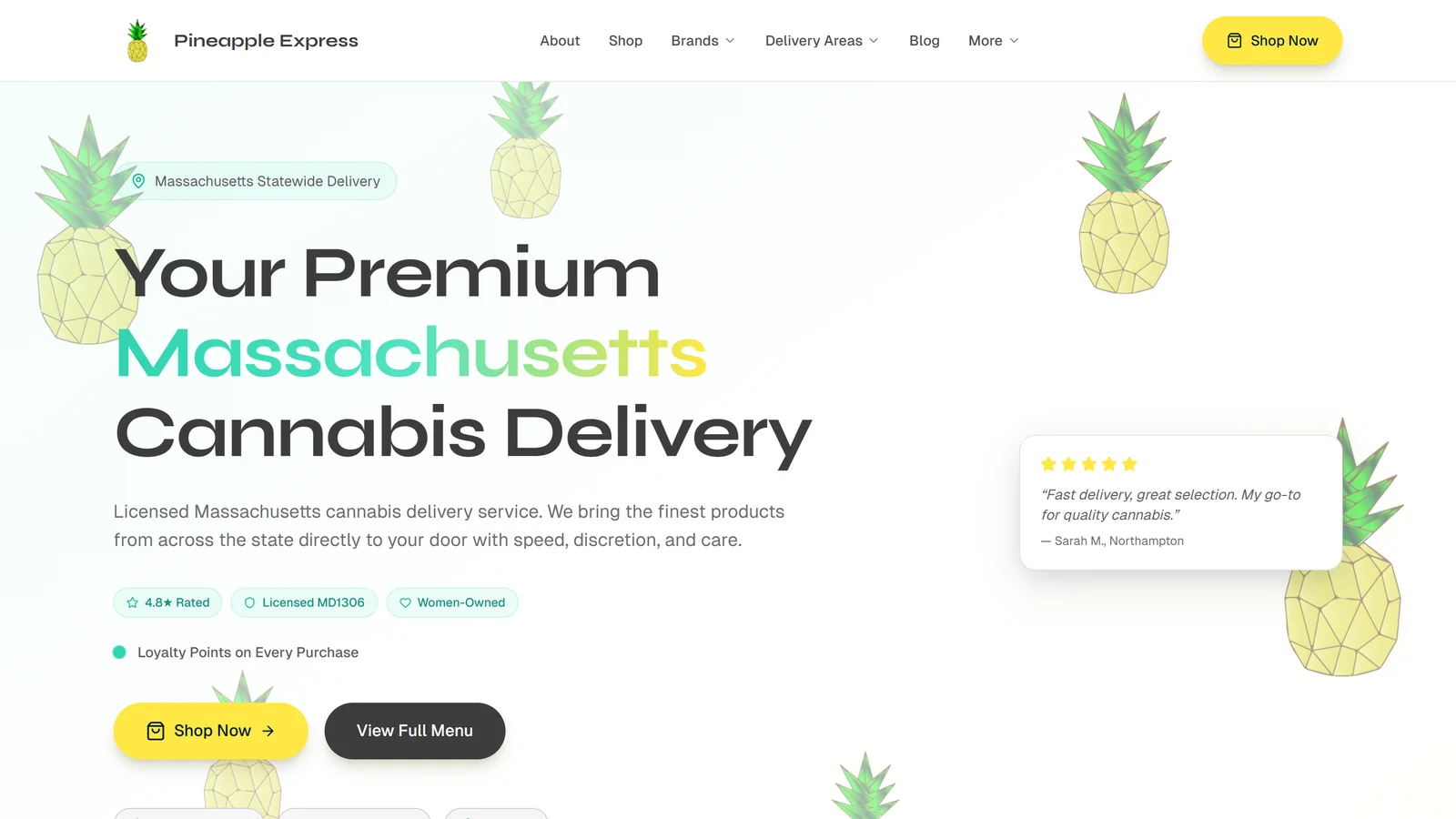
A sunny, education-first site for a delivery company covering 60 Massachusetts towns, each with its own page, plus a brand directory and a shop that runs on WebJoint. Read the Pineapple Express case study.
Toasty CA, Orange County
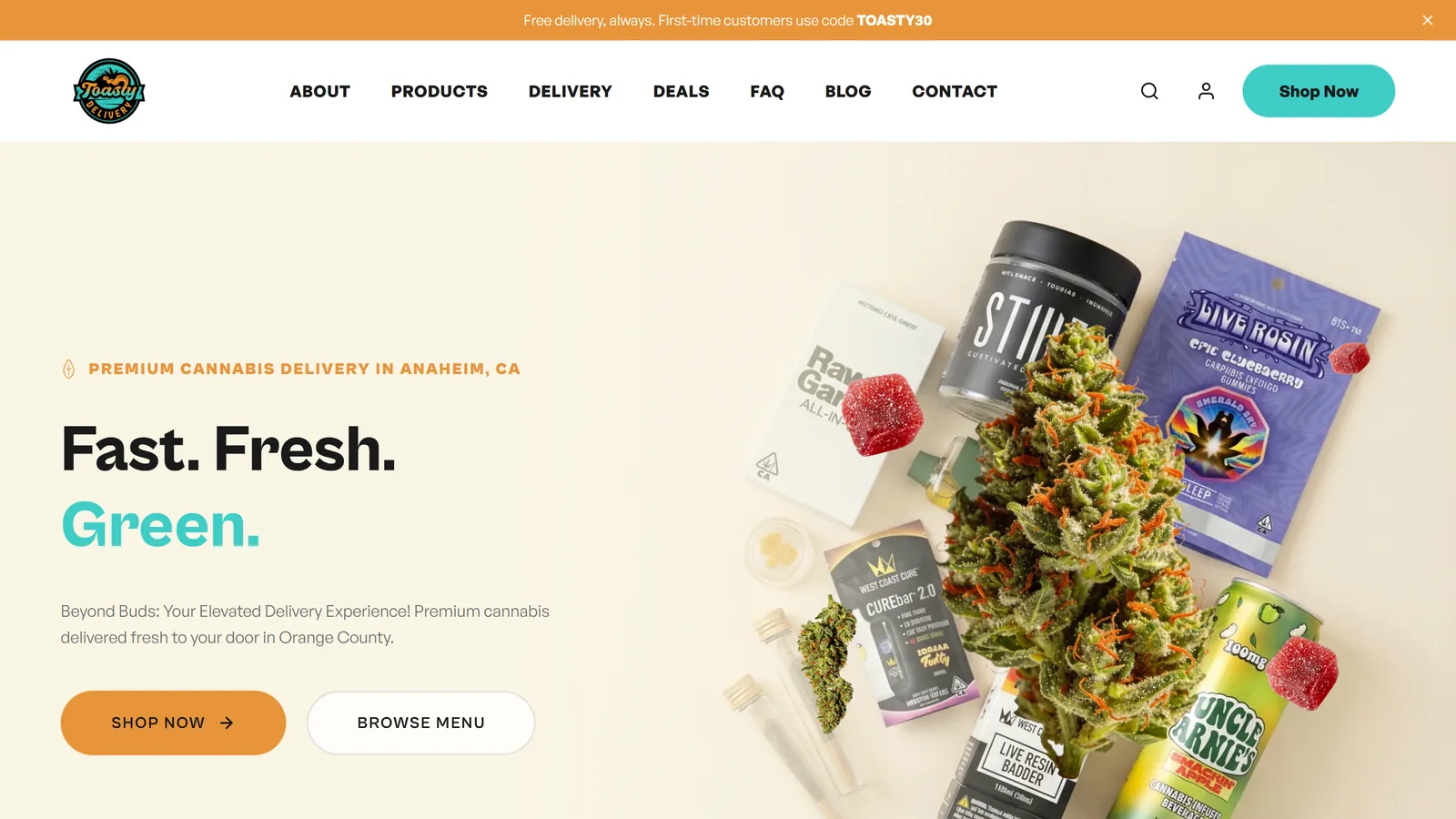
A delivery-only retailer in Anaheim, with a page for each of the 22 Orange County cities it delivers to, its state license number in every footer and a shop that runs on WebJoint. Read the Toasty CA case study.
The Cannabashery, San Pedro and the South Bay
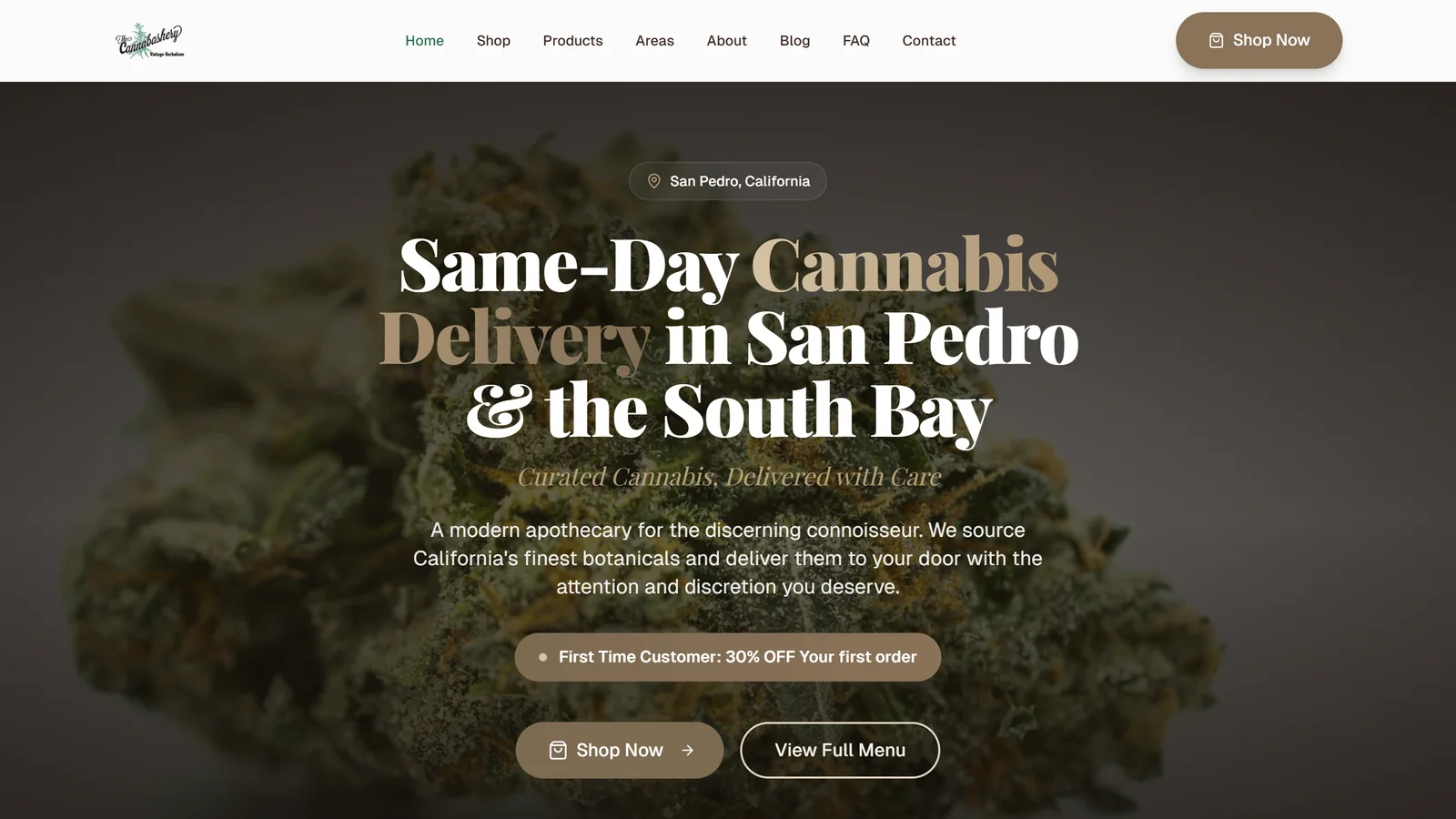
An apothecary-styled site for a delivery service in San Pedro, with a page for each of the 20 South Bay cities and areas it serves and a menu that runs on WebJoint. Read the Cannabashery case study.
T.h.Chi, the East Bay

A dark, photo-led site for delivery across nine East Bay cities, each with its own page, and a Leafly menu embedded on the site. Read the T.h.Chi case study.
Leaf Runner, the Bay Area
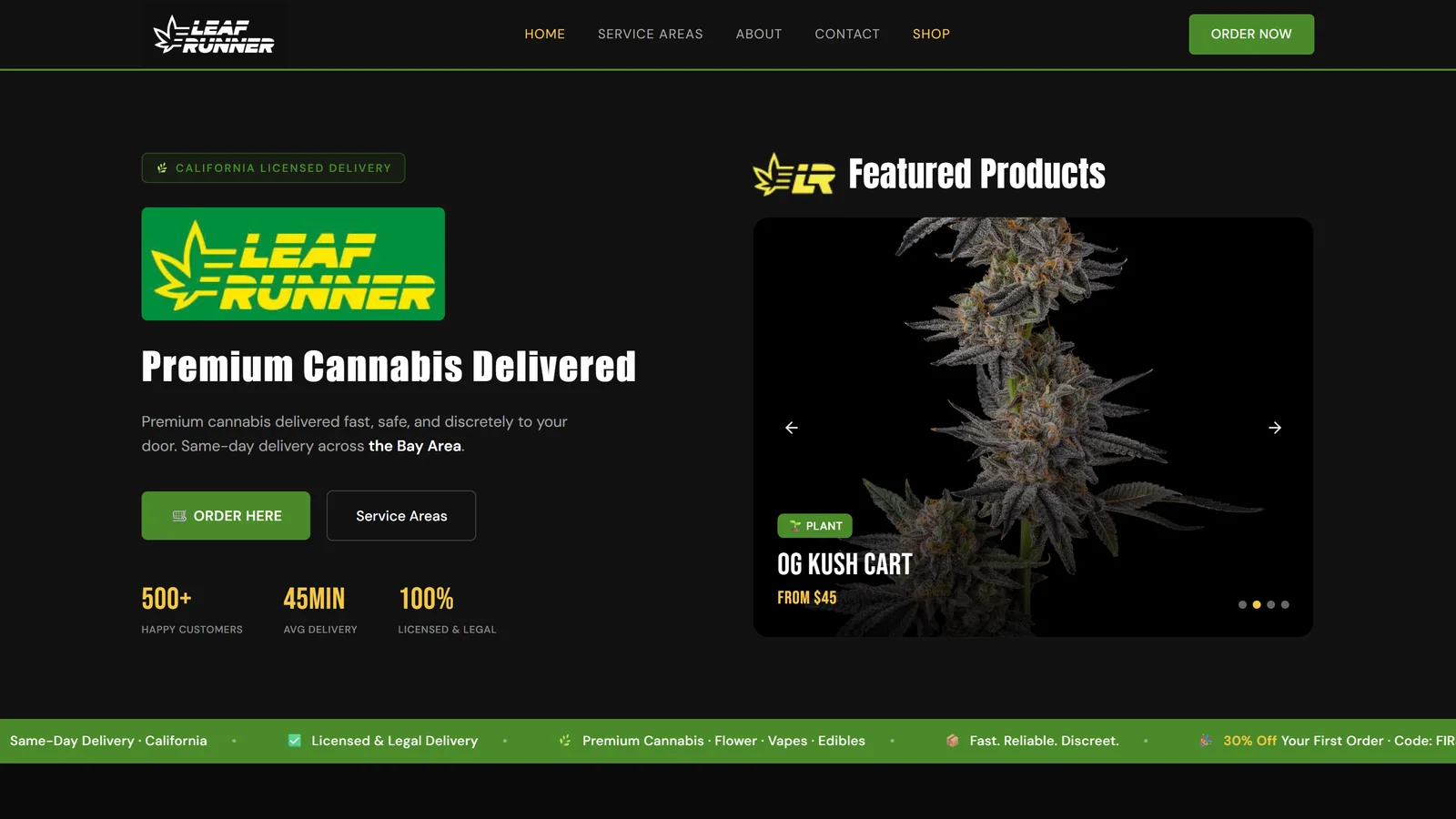
A rebuild from WordPress to Next.js that kept the brand’s bold look and added a page for each of 91 Bay Area cities. Read the Leaf Runner case study.
See all of our cannabis case studies.
Our history with WebJoint
We built webjoint.com and the WebJoint platform, the software licensed dispensaries and delivery services use for point of sale, delivery management, online ordering and marketing. The team powering Nexvato has a history with WebJoint, so we know the operator’s side of cannabis: menus that change daily, drivers and delivery zones, purchase limits and the compliance tracking behind every order.
That shows up in the work. BlazeXpress, Pineapple Express, Toasty CA and The Cannabashery sell through WebJoint storefronts on their own domains. On webjoint.com we built a cannabis regulations directory covering all 50 states, with a clickable map and a page for each state, and WebJoint offers Nexvato’s growth and marketing services to the operators on its platform. Read the WebJoint case study.
What we do for cannabis businesses
- Dispensary and delivery websites designed around your brand, fast on phones and built so customers reach your menu in a tap.
- Menus and ordering connected to the platform you already use, whether that’s WebJoint, Leafly or another provider, on your own domain where the platform allows it.
- Compliance in every template: 21+ age verification that doesn’t hide your pages from search engines, license numbers where your state requires them, and clear ID and delivery-area rules.
- Local SEO: a page for every city or town you deliver to, structured data that describes your business and where you serve, and content that answers your customers’ questions.
- Moving off WordPress without losing what you’ve built in search, with old addresses kept or permanently redirected.
- Software for operators, from the WebJoint platform to custom tools and integrations.
See our web design services and SEO services, or browse all of our case studies.
Understanding the Unique Challenges of Cannabis Website Development
Creating websites for cannabis businesses comes with its own set of unique challenges. The industry is heavily regulated, and these regulations can vary significantly from one location to another. This makes cannabis website development a specialized field that requires knowledge of both web design principles and the specific needs of the marijuana industry.
Navigating Legal Restrictions in Cannabis Web Design
When developing websites for cannabis businesses, it's crucial to understand and navigate the legal restrictions that apply. These restrictions can impact various aspects of your website, from the content you can display to the way you market your products.
One of the primary challenges is ensuring that your website complies with age verification requirements. Many jurisdictions require cannabis websites to verify that visitors are of legal age before allowing them access to product information or online stores. This often involves implementing an age-gate on the homepage, which asks users to confirm their age before entering the site.
Another important consideration is the type of content you can display on your website. Many places have strict rules about how cannabis products can be advertised or presented online. For example, you might be prohibited from showing images of cannabis products being consumed or making claims about the health benefits of marijuana. Your web design needs to effectively showcase your products and services while staying within these legal boundaries.
It's also important to be aware of restrictions on online sales of cannabis products. In some areas, you may be allowed to sell cannabis online for delivery or pickup, while in others, you can only provide information about products available in-store. Your website's functionality needs to be tailored to what's legally permissible in your location.
Balancing Professionalism and Cannabis Culture in Web Design
One of the unique aspects of cannabis web design is finding the right balance between professionalism and cannabis culture. The marijuana industry has a rich cultural history, but as it becomes more mainstream, many businesses are aiming for a more professional image.
Your web design should reflect the specific brand identity of the cannabis business you're working with. Some businesses might want to embrace traditional cannabis imagery and culture, while others might prefer a more clinical, wellness-focused approach. The key is to create a design that authentically represents the brand while also appealing to the target audience.
Color choices play a significant role in this balance. While green is often associated with cannabis, overusing it can lead to clichéd designs. Consider using a broader palette that includes earthy tones for a natural feel, or bright, modern colors for a more contemporary look. The imagery you use should also strike this balance – high-quality product photos can convey professionalism, while carefully chosen cultural references can add personality to the site.
It's also important to consider the tone of your written content. The language you use should be appropriate for your target audience and consistent with your brand identity. Whether you're going for a casual, friendly tone or a more formal, educational approach, make sure it's consistent across all pages of your website.
Essential Elements of Marijuana Dispensary Web Design
Designing a website for a marijuana dispensary requires careful consideration of both aesthetic and functional elements. A well-designed dispensary website should not only look appealing but also provide a smooth, intuitive user experience that helps visitors find the information they need quickly.
Creating an Intuitive Menu System for Cannabis Products
One of the most important features of a marijuana dispensary website is its product menu. This needs to be well-organized, easy to navigate, and up-to-date with current stock and pricing information.
A good menu system should categorize products in a way that makes sense to your customers. Common categories might include flower, edibles, concentrates, and topicals. Within these categories, you might further organize products by strain, potency, or effects. Consider implementing filters that allow users to sort products based on various criteria, such as THC content, price range, or desired effects.
Each product should have its own detailed page with high-quality images, a thorough description, and information about its effects and usage. If legally permitted in your area, including customer reviews can be helpful for potential buyers. Make sure your menu system is easy to update, as stock and pricing in dispensaries can change frequently.
It's also important to consider how your menu will display on mobile devices. Many customers may be browsing your products on their phones while in or near your store, so ensure that your menu is easily navigable on smaller screens.
Incorporating Educational Resources in Dispensary Websites
Education is a crucial component of many cannabis businesses, especially dispensaries. Many customers, particularly those new to cannabis, are looking for information about different products, consumption methods, and potential effects.
Consider creating a dedicated section on your website for educational content. This might include articles about different cannabis strains, explanations of various consumption methods, or information about the potential benefits and risks of cannabis use. You could also include a FAQ section addressing common questions your customers might have.
Video content can be particularly effective for education. Short, informative videos about how to use different products or explaining aspects of cannabis can be engaging and helpful for your customers. Just be sure that all educational content complies with local regulations about what claims can be made regarding cannabis.
Incorporating this educational content not only helps your customers but can also boost your website's search engine optimization (SEO). By providing valuable, relevant content, you increase the chances of your site appearing in search results when people look for information about cannabis.
SEO for Cannabis Websites: Improving Visibility While Staying Compliant
Search Engine Optimization (SEO) is crucial for any website, but it comes with unique challenges in the cannabis industry. Many common advertising channels are not available to cannabis businesses, making organic search traffic even more important.
Why SEO matters more when you can’t run ads
The biggest ad platforms are closed to THC products. Google’s dangerous products or services policy doesn’t allow ads for substances that alter mental state for the purpose of recreation, and Meta’s drugs and pharmaceuticals policy says ads may not promote or offer the sale of THC products. Hemp-derived CBD is a narrow exception on both, with certification and location limits.
That leaves the channels you earn rather than buy: Google search and Maps, AI answers, cannabis directories and your own website. So we build search into cannabis websites from the first page: a page for each city or town you serve, fast mobile pages, structured data that tells search engines and AI assistants who you are and where you deliver, an age gate that doesn’t hide your content, and articles that answer the questions customers ask before they order. Our SEO, local SEO and AI search optimization services keep that work going after launch.

Keyword Strategy for Cannabis Industry Websites
Developing an effective keyword strategy is a crucial part of SEO for cannabis websites. This involves researching and selecting the right keywords to target in your website's content.
Start by brainstorming a list of terms relevant to your business. This might include general terms like "cannabis dispensary" or "marijuana products," as well as more specific terms related to the products you offer, like "indica strains" or "cannabis edibles." Use keyword research tools to find out how often these terms are searched and how competitive they are.
It's often effective to target long-tail keywords – longer, more specific phrases that might have less competition. For example, instead of just targeting "cannabis dispensary," you might target "organic cannabis dispensary in [your city]." These longer phrases often have higher conversion rates because they're more specific to what the searcher is looking for.
Remember to consider local SEO as well. Many cannabis customers are looking for dispensaries or products in their local area. Include location-based keywords and ensure your business is listed in local directories and on Google Business Profile.
Content Marketing Strategies for Cannabis Websites
Content marketing can be a powerful tool for improving your website's SEO and providing value to your customers. By regularly publishing high-quality, relevant content, you can improve your search engine rankings and establish your business as a trusted source of information in the cannabis industry.
Consider starting a blog on your website where you can publish articles on topics relevant to your customers. This might include information about different cannabis strains, tips for first-time users, or news about developments in the cannabis industry. Make sure all your content is well-researched and factually accurate.
In addition to written content, consider incorporating other types of media. Infographics can be a great way to present information in an easily digestible format. Videos, whether educational or showcasing your products, can be highly engaging for visitors and can also help with your SEO if properly optimized.
User-generated content, such as customer reviews or testimonials, can also be valuable for both SEO and building trust with potential customers. Just be sure to moderate this content to ensure it complies with all relevant regulations.
Remember to optimize all your content for SEO. This includes using your target keywords naturally throughout the text, optimizing title tags and meta descriptions, and using header tags to structure your content. However, always prioritize creating valuable, readable content over keyword stuffing.
Implementing Cannabis Ecommerce Solutions
As online sales become increasingly important in the cannabis industry, implementing effective ecommerce solutions is crucial for many businesses. However, selling cannabis products online comes with its own set of challenges and considerations.
Choosing the Right Ecommerce Platform for Cannabis Sales
Selecting the right ecommerce platform is crucial for cannabis businesses. Many mainstream ecommerce platforms have restrictions on selling cannabis products, so it's important to choose a platform that is cannabis-friendly.
Look for platforms that offer features specific to the cannabis industry, such as age verification tools and the ability to set purchase limits in accordance with local regulations. The platform should also be able to handle the complexities of cannabis taxation, which can vary significantly by location.
Security is another crucial factor. Because of the nature of the product and the financial transactions involved, cannabis ecommerce sites need robust security measures. Look for platforms that offer strong encryption and compliance with payment card industry (PCI) standards.
Consider the scalability of the platform as well. As your business grows and regulations change, you'll want a platform that can adapt to your changing needs. This might include the ability to easily add new products, change your site's structure, or implement new features as needed.
Designing User-Friendly Cannabis Online Stores
Creating a user-friendly online store is crucial for the success of your cannabis ecommerce site. The design should make it easy for customers to find what they're looking for, understand product details, and complete their purchase.
Start with a clean, intuitive design that's easy to navigate. Organize your products into clear categories and implement a search function to help users find specific items. Each product should have its own detailed page with high-quality images, thorough descriptions, and clear pricing information.
Implement features that enhance the shopping experience. This might include the ability to filter products by various criteria (like strain, THC content, or desired effects), a wishlist function for users to save items for later, or a feature that suggests related products.
The checkout process should be as smooth and straightforward as possible. Minimize the number of steps required to complete a purchase and offer guest checkout options. Clearly communicate shipping options, costs, and any restrictions on delivery areas.
Remember to design your store with mobile users in mind. Many customers will be browsing and purchasing on their smartphones, so ensure that your site is fully responsive and easy to use on smaller screens.
Ensuring Mobile-Friendliness in Cannabis Website Design
In today's digital landscape, having a mobile-friendly website is crucial for any business, and the cannabis industry is no exception. Many users access cannabis websites on their smartphones, whether they're looking up product information while in a dispensary or placing an order for delivery.
Responsive Design for Cannabis Websites
Responsive design is an approach to web design that ensures a website looks and functions well on any device, from desktop computers to smartphones. This is crucial for cannabis websites, as users might be accessing your site from a variety of devices.
When implementing responsive design, consider how your layout will adapt to different screen sizes. Elements like navigation menus, product displays, and forms should be easy to use on both large and small screens. Text should be readable without zooming, and buttons should be large enough to tap easily on a touchscreen.
Images play a big role in cannabis websites, showcasing products and creating a visual brand identity. Ensure that your images are optimized for mobile – they should load quickly and display clearly on smaller screens. Consider using responsive images that automatically adjust their size based on the user's device.
Remember to test your responsive design on a variety of devices and browsers. What looks good on your desktop might not work as well on a particular smartphone or tablet. Regular testing and tweaking can help ensure a smooth experience for all users.
Optimizing Site Speed for Mobile Cannabis Users
Site speed is crucial for mobile users, who are often accessing websites on slower connections or while on the go. A slow-loading site can frustrate users and lead them to leave before they've even seen your content.
Start by optimizing your images. Large, high-resolution images can significantly slow down your site. Use image compression tools to reduce file sizes without noticeably affecting quality. Consider using lazy loading for images, which means images only load as the user scrolls down the page.
Minimize the use of large files or complex scripts that can slow down your site. If you're using videos, consider hosting them on a platform like YouTube and embedding them rather than hosting them directly on your site.
Implement browser caching, which allows returning visitors to load your site more quickly. Also, consider using a Content Delivery Network (CDN) if you have a geographically diverse audience. This can help deliver your content more quickly to users in different locations.
Regularly test your site speed using tools like Google's PageSpeed Insights. These tools can provide specific recommendations for improving your site's performance on both mobile and desktop devices.
Cannabis Branding and Web Design: Creating a Cohesive Online Presence
In the competitive cannabis industry, strong branding is crucial for standing out from the crowd. Your website should be an extension of your overall brand identity, reinforcing your unique value proposition and connecting with your target audience.
Incorporating Brand Elements in Cannabis Website Design
Your website should be a visual representation of your brand. This goes beyond just using your logo and brand colors – it's about creating a cohesive look and feel that aligns with your brand identity.
Start by ensuring that your website's color scheme aligns with your brand colors. Use these colors consistently throughout your site, from headers and buttons to background accents. However, be careful not to overuse strong colors, as this can make your site hard to read or visually overwhelming.
Typography is another important brand element. Choose fonts that align with your brand personality – sleek, modern fonts for a high-end brand, or perhaps something more playful for a brand with a laid-back image. Be consistent with your font choices across your site.
Incorporate your brand's visual elements, such as logos, icons, or patterns, throughout your site design. These can be used as background elements, dividers between sections, or as part of your navigation design. Just be sure not to overuse them – subtlety often works best.
The imagery you use on your site is also a key part of your brand identity. Whether you're using product photos, lifestyle images, or illustrations, ensure that they align with your brand aesthetic and appeal to your target audience.
Crafting Brand-Aligned Content for Cannabis Websites
Your brand isn't just about visual elements – it's also about your voice and the way you communicate with your audience. The content on your cannabis website should align with your brand identity and speak directly to your target customers.
Start by defining your brand voice. Is it professional and educational? Friendly and approachable? Edgy and counterculture? Once you've established your brand voice, ensure that all the content on your site – from product descriptions to blog posts – consistently uses this voice.
Create content that aligns with your brand values and mission. If your brand focuses on the medicinal benefits of cannabis, for example, you might include detailed, scientifically-backed information about different strains and their effects. If you're targeting recreational users, your content might focus more on the experience of using different products.
Your brand story is also an important part of your content. Consider including an "About Us" page that shares your company's history, mission, and values. This can help create a connection with your audience and differentiate you from competitors.
Remember that branding extends to customer interactions as well. If you have features like live chat or a contact form on your website, ensure that the way you communicate through these channels aligns with your brand voice and values.
Cannabis-Friendly Website Hosting: Ensuring Stability and Compliance
Finding the right hosting solution is a crucial but often overlooked aspect of cannabis website development. Many mainstream hosting providers have restrictions on cannabis-related content, which can lead to unexpected site shutdowns or other issues.
Choosing a Reliable Hosting Provider for Cannabis Websites
When selecting a hosting provider for your cannabis website, look for companies that explicitly state they accept cannabis-related sites. These providers understand the unique needs and challenges of the industry and are less likely to shut down your site due to its content.
Consider the level of security offered by the hosting provider. Cannabis websites often handle sensitive customer information and may process payments, so robust security measures are essential. Look for hosts that offer SSL certificates, regular backups, and strong firewalls.
Reliability is another crucial factor. Your website needs to be accessible 24/7, especially if you're running an ecommerce site. Look for hosting providers with high uptime guarantees and good customer support in case issues do arise.
The speed of your hosting can also impact your website's performance and user experience. Consider hosts that offer solid state drive (SSD) storage and content delivery networks (CDNs) to ensure fast loading times for your visitors.
Compliance Considerations in Cannabis Website Hosting
When hosting a cannabis website, compliance with local laws and regulations is paramount. Your hosting provider should be familiar with these regulations and able to help you stay compliant.
One key consideration is data storage location. Depending on your location and the markets you serve, there may be requirements about where customer data can be stored. Some cannabis businesses prefer to use hosting providers that store data within their own country or state.
Your hosting provider should also be able to support any age verification or geolocation restrictions you need to implement on your site. This might include the ability to block access from certain locations or implement robust age verification systems.
Consider the hosting provider's policies on payment processing as well. Some providers may have restrictions on cannabis-related transactions, which could impact your ability to sell products online.
Work with a team that knows cannabis
We’ve designed and built websites for cannabis delivery services in Massachusetts and California, and we built the WebJoint platform that dispensaries and delivery services run on. Whether you need a new dispensary website, pages for your delivery area or more customers from search, tell us about your business.